
How Islands Took Center Stage at COP30
The humidity of the Amazon was matched only by the heated intensity of the negotiations at COP30. For two weeks in November 2025, the world gathered in Belém, faced with the undeniable reality of our climate crisis. For BPA, our mission was clear: ensure that island nations were not just heard, but were leading the conversation on the transition to 100% renewable energy. While the high-level political negotiations were often fraught with tension, the real momentum was happening on the ground, driven by island leaders, youth activists, and collaborative partnerships.
The BPA contingent, headed by Peace Boat US Director Emilie McGlone, hit the ground running on Monday, before the opening plenaries had even concluded, supporting our partners for a critical panel on "Militarism, Climate Change and the Pacific." This session on climate justice set the stage for our most significant moment of the conference the very next day.
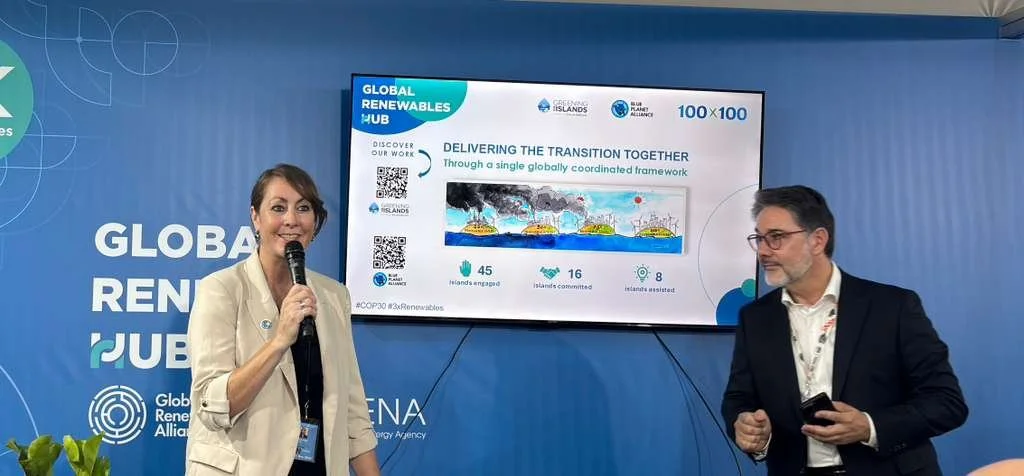
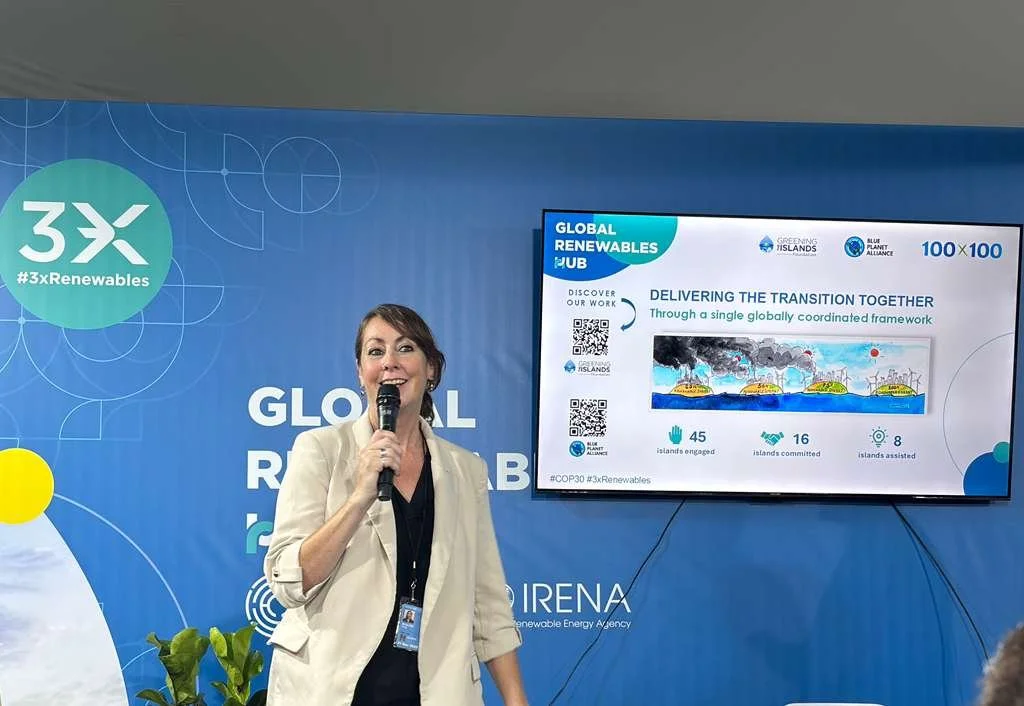
On Tuesday, inside the Global Renewables Hub, we moved from talk to action. In partnership with the Greening the Islands (GTI) Foundation, we officially unveiled the 100x100 Campaign. The goal is audacious but necessary: getting "100 islands or countries for 100% renewables." The room was packed with leaders from Saint Kitts and Nevis, DG Energy European Commission, and National Council for Climate Change of Italy, to name a few. Energy ministers introduced a framework designed to provide the resources necessary for islands to mandate a total transition away from fossil fuels. We know this model works because we’ve seen it happen in Hawai'i; now, we are taking it global.
Following the high of the launch, we shifted gears into strategic diplomacy. On Wednesday, as the conference focused on Oceans and Forests, we spent the day connecting the dots between our renewable mandate and ocean conservation, meeting with prospective partners to explain how renewable microgrids can protect coral reefs from oil spills. We returned to the public stage on Thursday evening, co-organizing "Disarming the Climate Crisis" with WILPF and Peace Boat US. The discussion was stark and necessary, examining how the military-industrial complex drives emissions and drains resources that could fund the renewable transition.
As the first week concluded, we turned our attention to the nexus of food and energy. On Friday and Saturday, our team attended technical sessions on agrivoltaics—the dual use of land for solar energy and farming—scouting technologies that our land-scarce island partners could adopt to solve food security and energy independence simultaneously.
We kicked off the second week with a massive "Action Day" on Monday, proving that the 100x100 Campaign was already yielding results. We were thrilled to announce a groundbreaking partnership with St. Kitts and Nevis to accelerate their specific energy transition plans, a concrete step toward energy independence. Throughout the day, we emphasized radical collaboration. We hosted "Innovation for Climate & Ocean Action" at the Finland Pavilion, followed by a vital side event at the Digital Innovation Pavilion co-organized with Peace Boat US. The energy in the room was palpable as youth leaders shared their lived experiences, focusing on ocean literacy and community-based adaptation. We capped off this marathon day at the public "Free Zone" for an emotional screening of The Last Dive, bridging the gap between storytelling and policy.
The final stretch of the conference saw us focusing on infrastructure and the next generation. On Tuesday, our team concentrated on urban resilience, attending sessions on blue infrastructure to find funding mechanisms for Caribbean port cities. By Wednesday, our Global Ambassadors were leading the charge in the Youth Pavilion, networking with other youth constituencies to ensure the "100% Renewable" demand was included in the global youth statement delivered to the Presidency.
As negotiations went into overtime on Thursday, we stood firm against the presence of fossil fuel interests. Blue Planet Alliance and Peace Boat US issued a joint statement demanding a clear "roadmap for the phase-out of fossil fuels." While the final text established the Belém Action Mechanism, the real victory was the momentum we built. By the time the gavels fell on Friday, we had secured new island commitments and forged vital private sector partnerships.
We left Brazil exhausted but energized. The road from Belém leads directly to the UN Ocean Conference in 2026. Islands are proving they are not merely victims of the climate crisis; they are the pioneers of the solution. The renewable energy revolution is here, and it is being led from the coasts up.
Are you ready to join the movement? Click here to learn more about the 100x100 Campaign and become a part of the Alliance today.