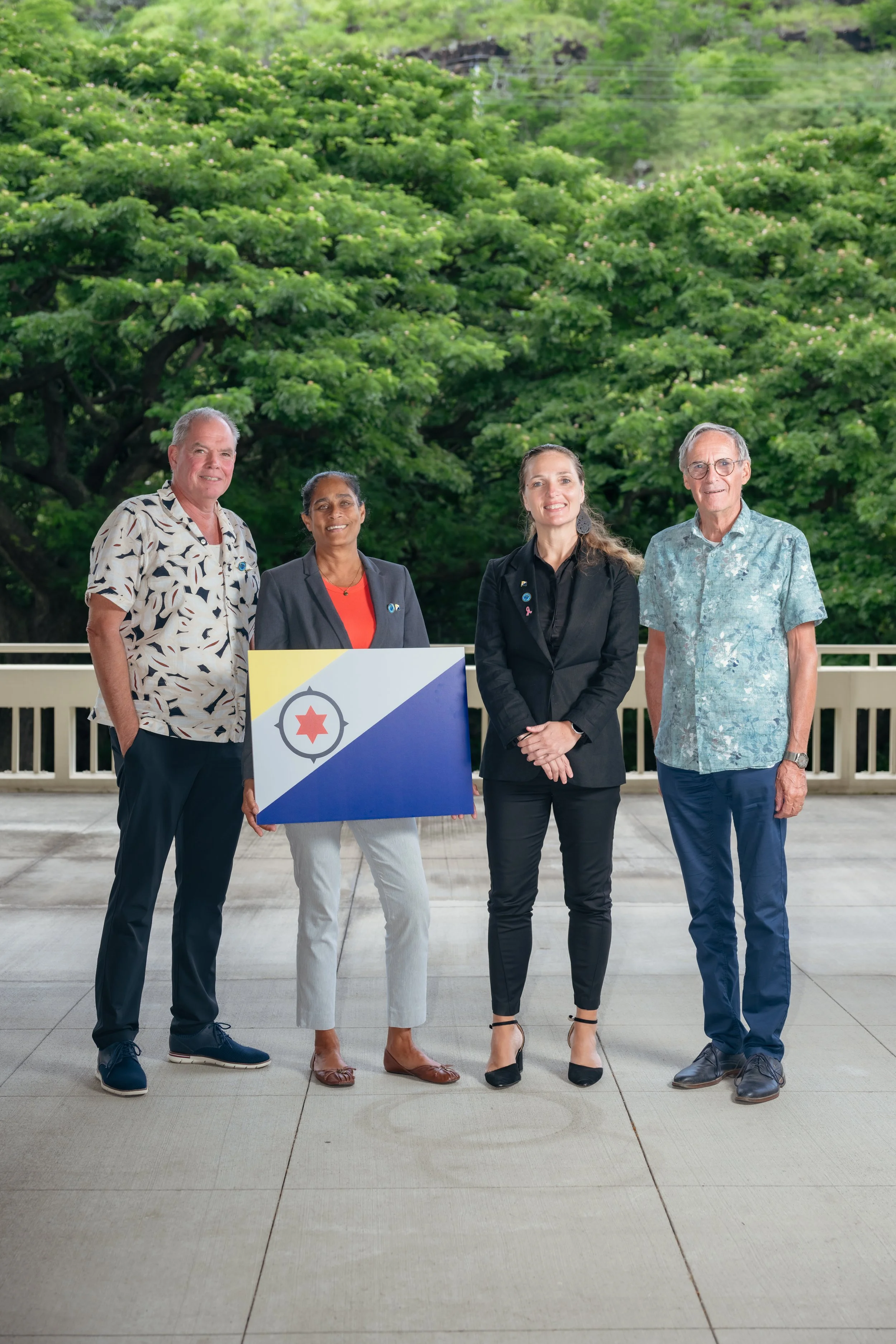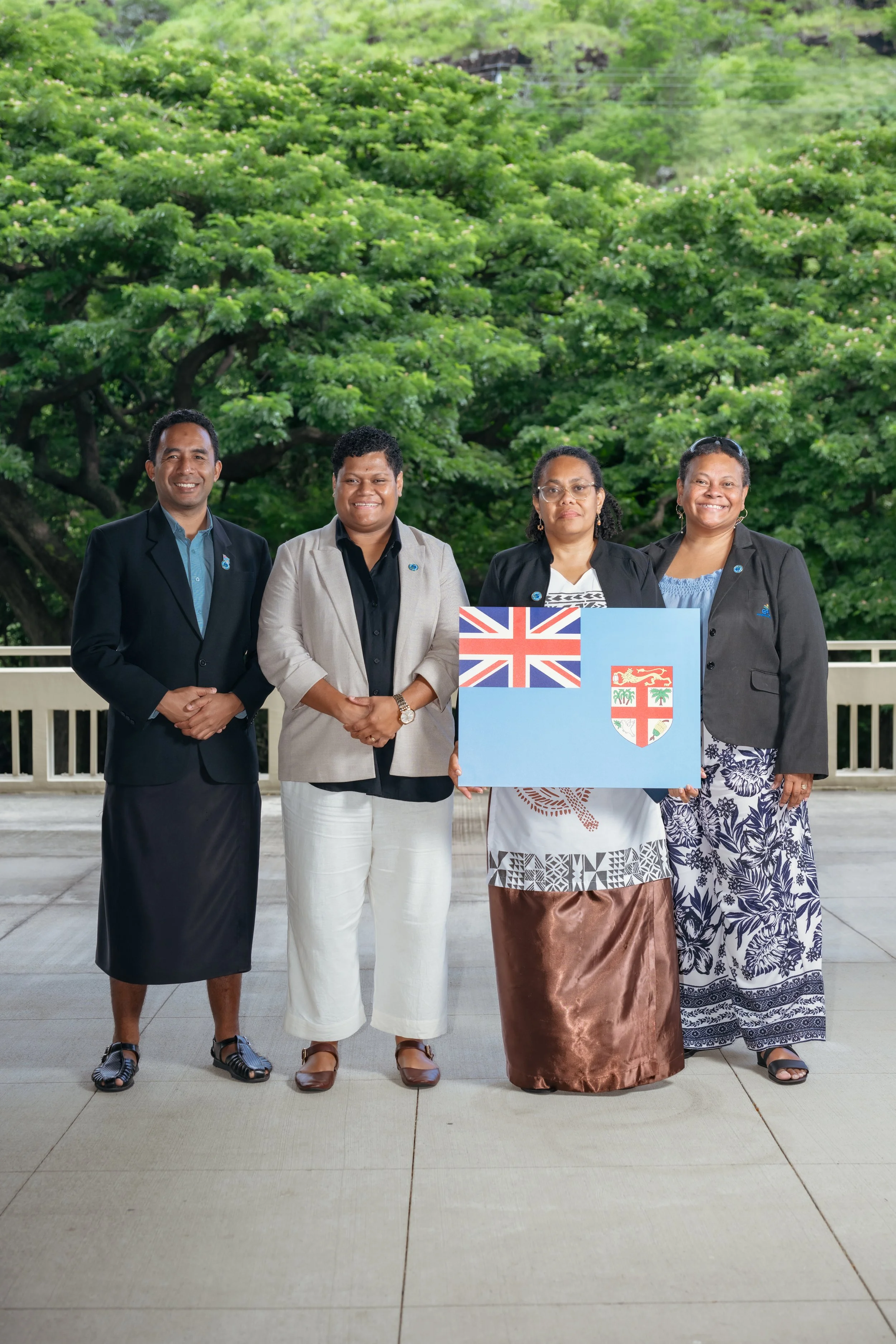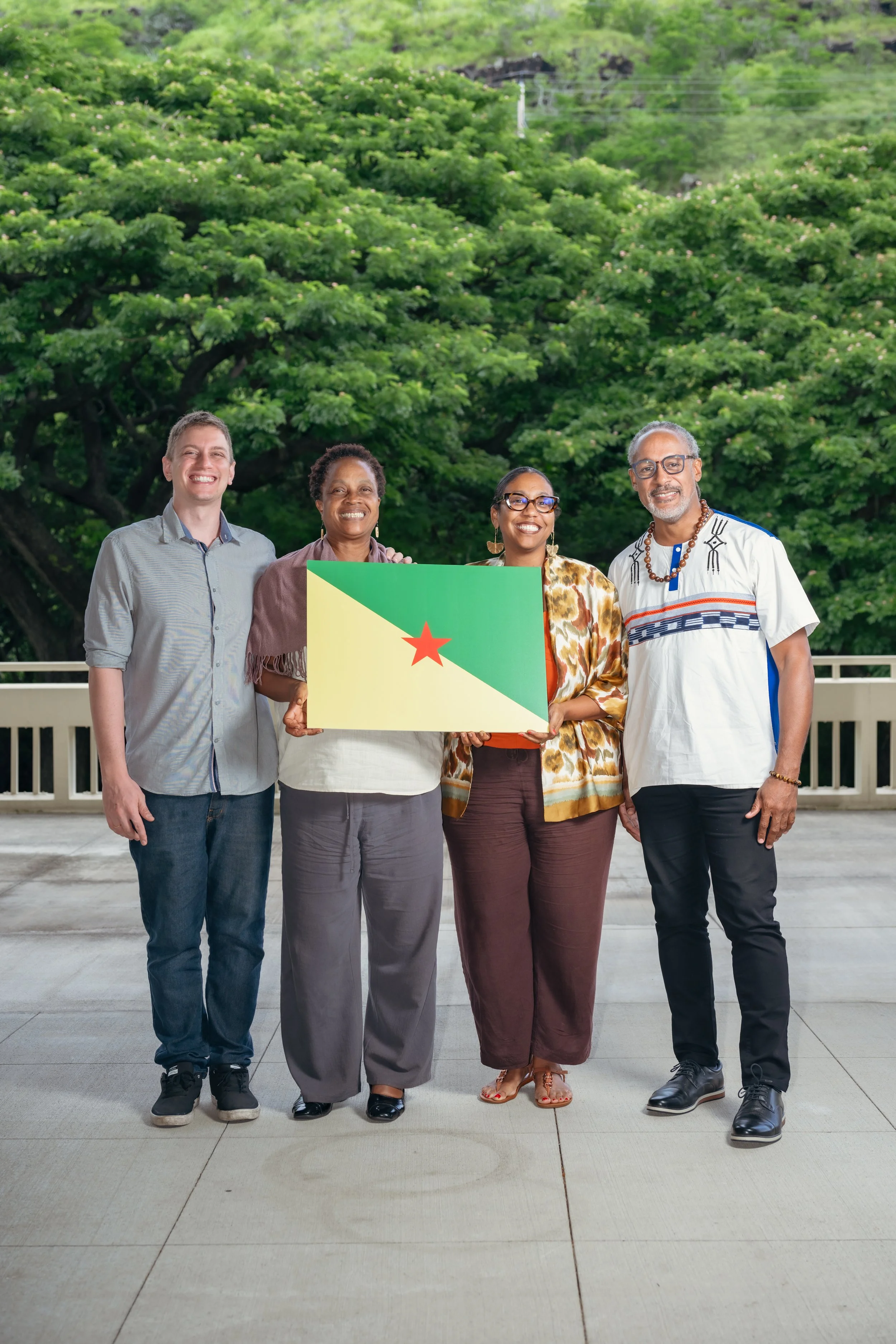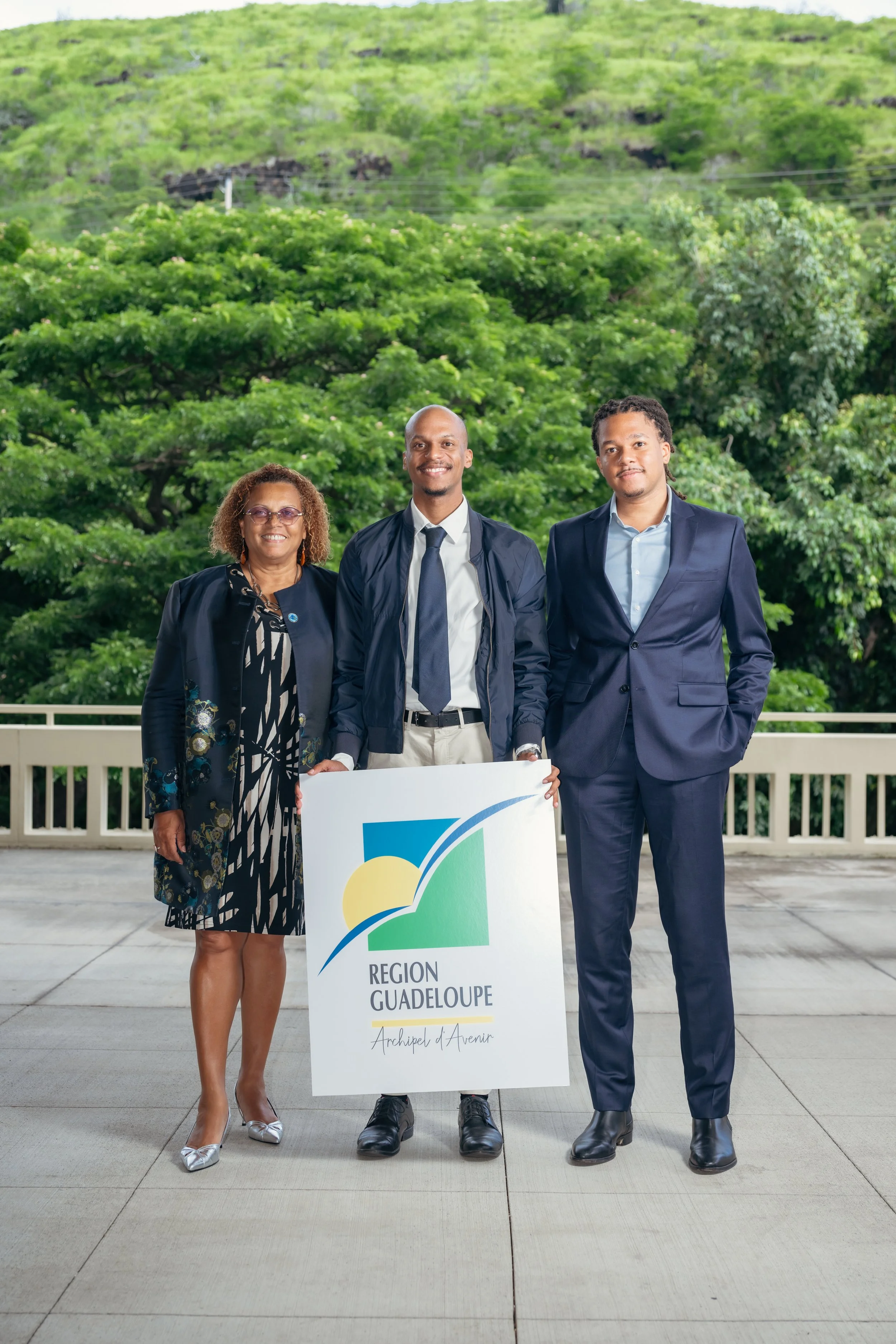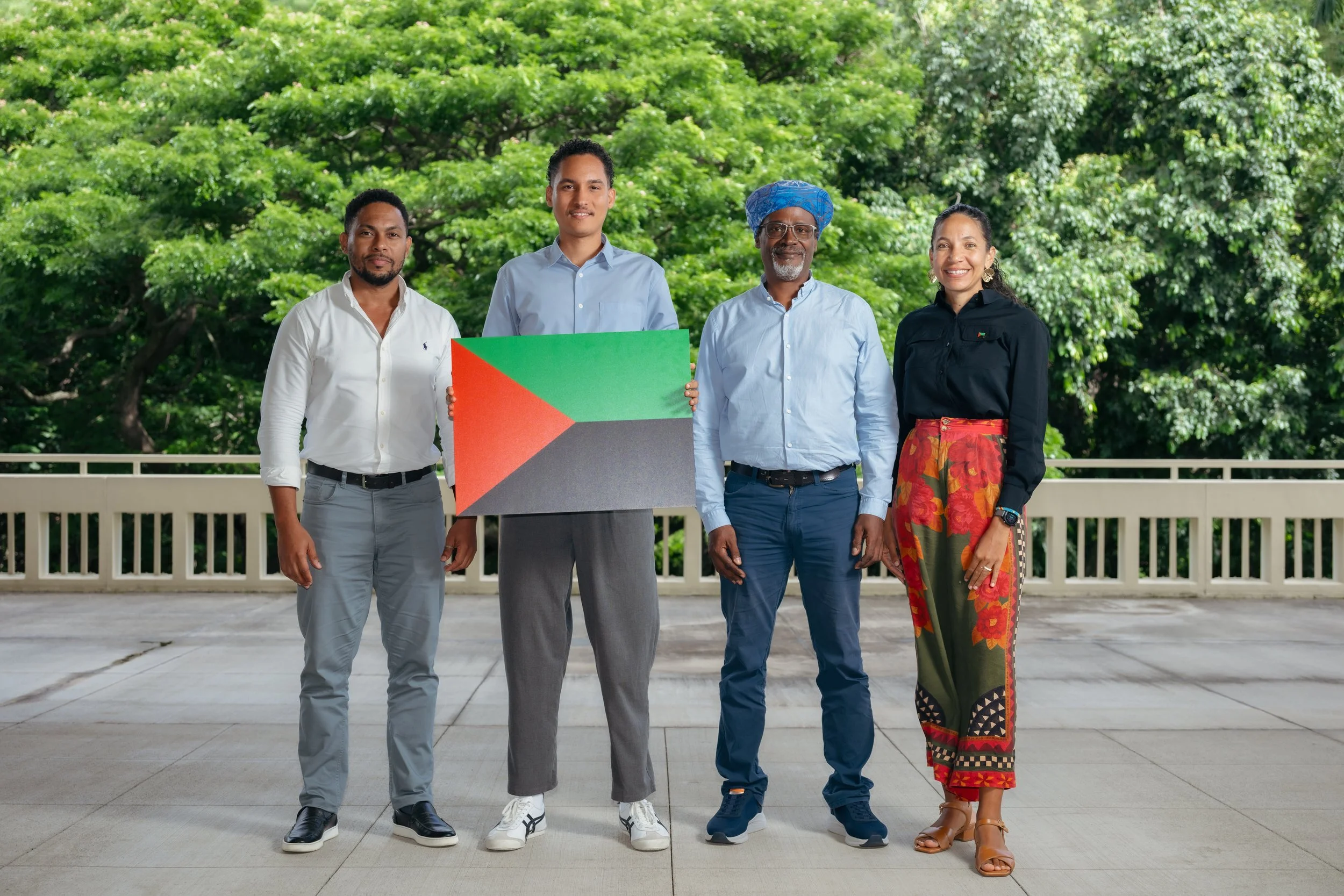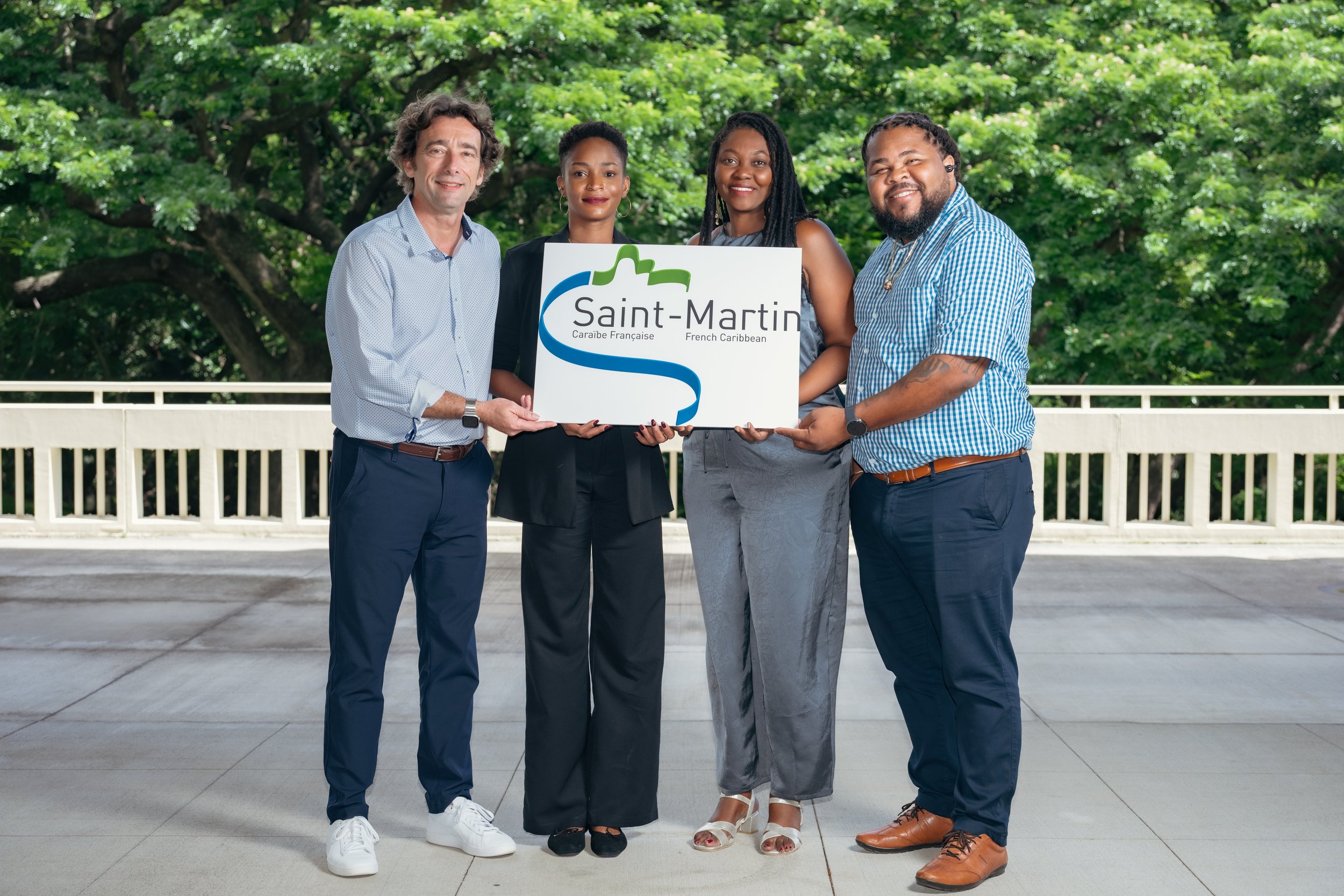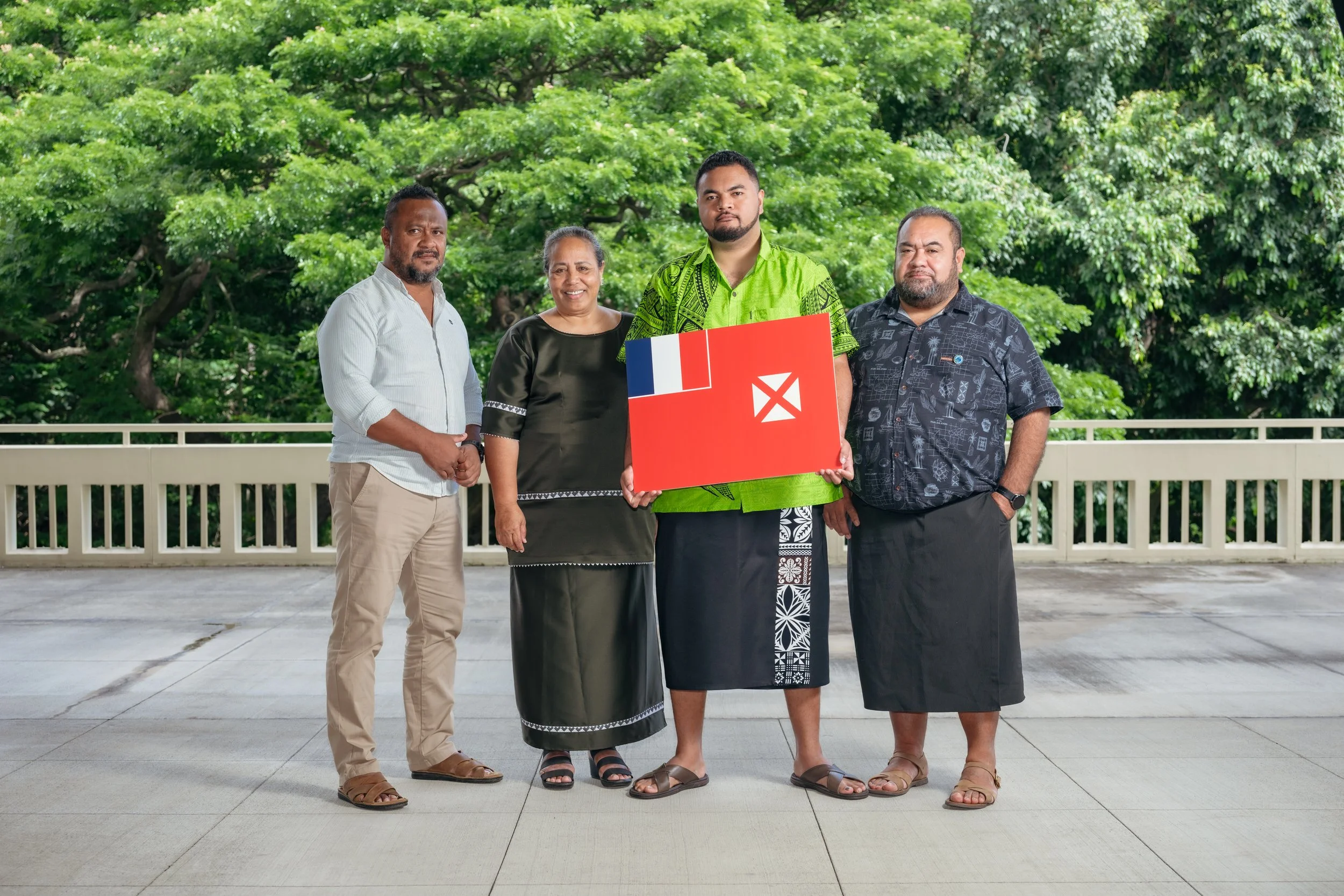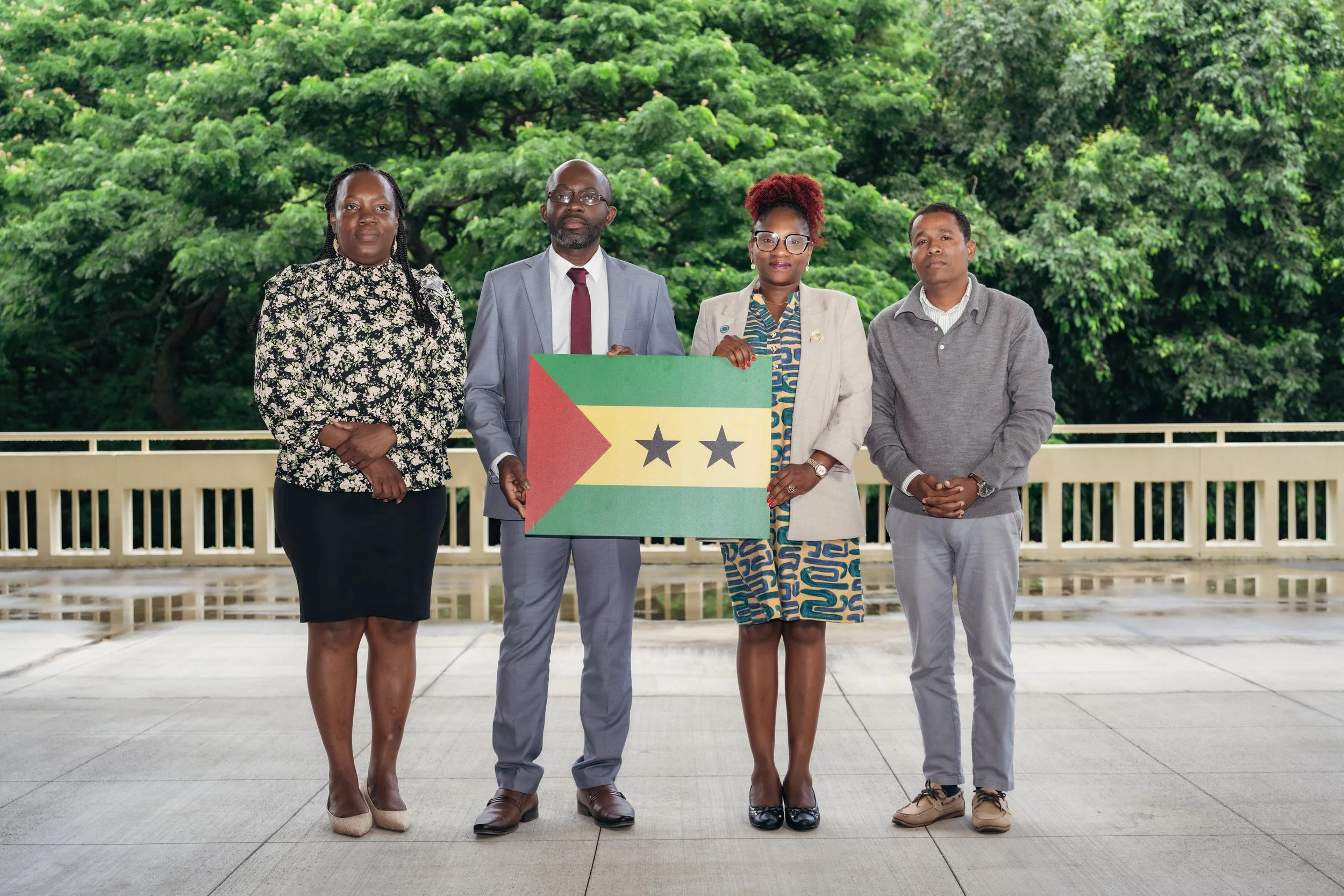
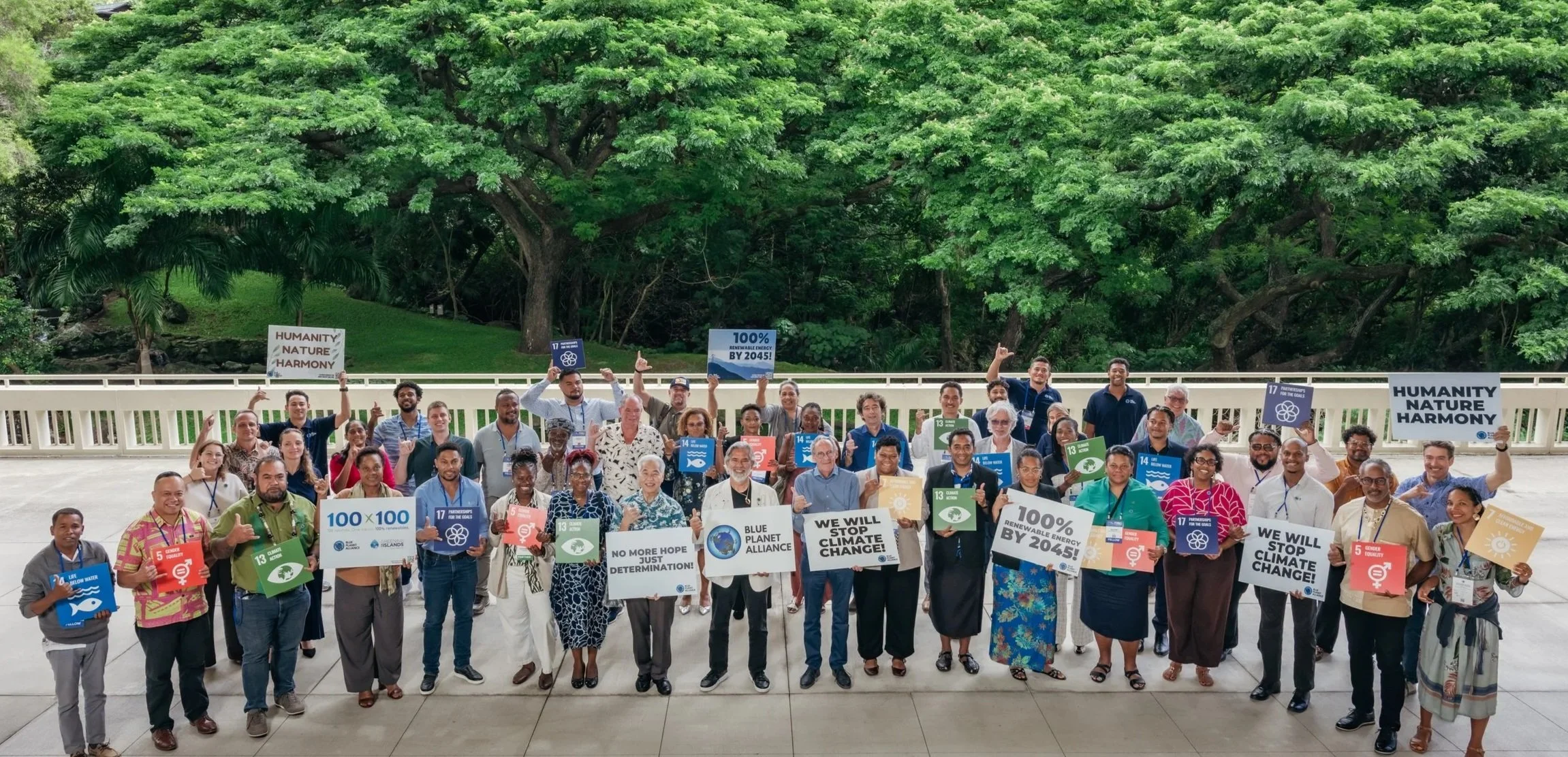
Our 7th Cohort brought together passionate leaders from Bonaire, Fiji, French Guiana, Guadeloupe, Martinique, Saint Martin, São Tomé and Príncipe, and Wallis and Futuna, united by a shared vision for a sustainable future for island communities.
They arrived in Hawaiʻi with different grids, economies and challenges, and a common goal: 100% renewable energy for the places they call home.
Launched in 2023, the Blue Planet Alliance Fellowship Program invites representatives from island nations and territories to Hawaiʻi for an intensive week of seminars and workshops. The goal is for each island to leave with its own plan for a 100% renewable energy transition. Fellows learn from policy experts, utility executives, community organizers, and climate advocates on topics from utility-scale projects and grid integration to regulation, financing, and energy equity.
The program builds on Hawaiʻi's own story. Hawaiʻi was the first U.S. state to set a legal mandate for 100% renewable energy by 2045, a goal championed by Blue Planet Foundation, the sister organization also founded by Henk Rogers. Blue Planet Alliance was created to help other islands follow that path. Today, 59 nations and territories have taken part across seven cohorts.
Here is a look back at Cohort VII's week.
Day 1
The week opened at the East-West Center with a Cultural Protocol led by Kahu Kordell Kekoa, grounding the cohort in place and purpose. The protocol emphasized uniting the islands as one and how we can support one another. Henk Rogers, Founder and CEO of Blue Planet Alliance, followed with opening remarks, and Jeff Mikulina, Lead Faculty and Climate and Social Impact Strategist, introduced the curriculum and the week ahead.
Next, each of the eight island teams gave an Island Presentation on where their energy systems stand today and the challenges they face. David Bissell, President and CEO of Kauaʻi Island Utility Cooperative, then shared Kauaʻi's 100% renewable energy journey, a close-to-home example of what an island utility can achieve. Governor David Ige joined as the lunch speaker. In 2015, he signed the landmark bill that made Hawaiʻi the first state in the nation to require 100% renewable electricity by 2045, the very commitment that inspired the Fellowship.
The afternoon turned hands-on with two "Serious Play" LEGO workshops. The first explored the complexity of island systems, and the second introduced the islands' energy challenge. Teams then built their own Island Grid Models and presented them to the group, a playful but revealing way to see how many moving parts an island grid has to balance.
Day 2
Day 2 went deep into the policy, regulation, and real-world development behind an energy transition. After Jeff Mikulina's recap of Day 1, Tashi Browne, Program Coordinator for the Caribbean Climate-Smart Accelerator (CCSA), gave a partner presentation on the accelerator's work across the Caribbean.
The morning's centerpiece was "Foundational Structures: Getting Regulation Right," led by Richard Wallsgrove, Co-Director of the Environmental Law Program and Assistant Professor of Law at the University of Hawaiʻi at Mānoa, and Isaac Moriwake, Managing Attorney at Earthjustice. Wren Wescoatt, Vice President of Development at Longroad Energy, followed with the challenges and solutions of renewable project development.
Over lunch, Colton Ching, Senior Vice President of Planning and Technology at Hawaiian Electric, shared the utility's perspective on Hawaii’s challenges and opportunities. In the afternoon, Colin Yost, Commissioner of the Hawaiʻi Public Utilities Commission, explained Hawaiʻi's current regulatory approach and the regulatory framework he faces as a Commissioner, and the Fellows broke into groups to reflect on what they had heard and how it applies to their roadmaps. Tony Siamomua, Education Coordinator at the Pacific Catastrophe Risk Insurance Company (PCRIC), closed the day with a session on assessing and managing the risk of climate catastrophes. Between sessions, each island team also gathered for its team photo.
Day 3
On Excursion Day, the Fellows left the conference room to see clean energy at work across Hawaiʻi.
The morning began at Kahauiki Village, a community near Keʻehi Lagoon in Honolulu that provides permanent, affordable homes for formerly homeless families with children.
Energy is part of what makes Kahauiki Village unique. The homes run on a solar and battery microgrid that lets the village supply most of its own power, drawing from the utility grid only when needed, with solar water heating and backup generation adding resilience. Keeping energy costs down also helps keep rents affordable for residents. The Fellows were able to see firsthand how energy, food, and housing security can work together. They toured the homes, the solar and battery system, and the aquaponics and garden.
At Leeward Community College, the group learned about the college's Net-Zero campus, enjoyed lunch and walked the campus. The afternoon brought them to Mililani Solar Park, up close with utility-scale solar that feeds Hawaiʻi's grid. This Agrivoltaics Solar project is the first of its kind in Hawaii on how Agriculture land can co-exist with renewable energy projects. Seeing these projects firsthand brought the ideas from the first two days to life.
Day 4
Day 4 tackled two questions every roadmap must answer: how to pay for the clean energy transition, and how to lead people through that change. After Jeff Mikulina's recap of Days 2 and 3, Gwen Yamamoto-Lau, Executive Director of the Hawaiʻi Green Infrastructure Authority, presented Creative Financing for Clean Energy and Equity. Bill Coy, Director of Global Policy Research at Energy Innovation, then led an extended session on Navigating Transformational Change.
Professor Chip Fletcher, Dean of the School of Ocean and Earth Science and Technology at the University of Hawaiʻi at Mānoa, joined as the guest lunch speaker sharing the realities of global impact on our planet due to climate change. In the afternoon, Joshua Cooper of the County of Maui's Office of Innovation and Sustainability spoke on Fighting for a Sustainable Planet, highlighting human right issues around climate and the devastation that Maui faced after the recent wild fires that led to lives lost. Finally, Olga Reym, Vice President of Operations at Mana Pacific, Inc., covered Competitive Financing in the Pacific Region for Renewable Energy.
After updates from the Caribbean and Pacific Directors, the Fellows returned to breakout sessions to discuss and shape their roadmaps.
Day 5
The last day brought everything together. Kashieka Broaster, WIRE Programme Lead and Gender Specialist at the Caribbean Centre for Renewable Energy and Energy Efficiency (CCREEE), opened with a partner presentation, followed by Jeff Mikulina's recap of Day 4. Dr. Matthias Fripp, Director of Global Policy Research at Energy Innovation, then presented "The Island Energy Puzzle: Modeling a Clean Energy Future," showing how modeling can help islands map their path to 100% clean energy.
Next, the Fellows broke into their island teams for strategic discussions, then paired up with another island team to review and give feedback on each other's roadmaps. Senator Chris Lee of the Hawaiʻi State Legislature joined as the guest lunch speaker. He was another integral part of Hawaiʻi's 100% renewable energy goal: as chair of the House Energy and Environmental Protection Committee in 2015, he introduced the bill that Governor Ige signed into law. The afternoon was then dedicated to the Fellows themselves: a time to discuss solutions for their islands with one another, collaborate across islands, and work out the details of getting their islands to a 100% renewable energy commitment.
In the closing session, each island team delivered a presentation of its Roadmap to 100% Renewable Energy, laying out its short- and long-term goals and the changes needed in its respective sectors to reach them. These presentations captured the heart of the Fellowship, turning a week of workshops, site visits and peer learning into concrete next steps and showing how the lessons of Hawaiʻi's transition can be adapted to very different grids, economies and communities.
With their roadmaps in hand, the Fellows now belong to a growing network of island leaders who share lessons, strengthen regional partnerships and support one another long after the week ends, all working toward resilient, affordable and sustainable energy futures for their communities.
That evening, the week ended with a Farewell Reception at the Rogers Residence, a chance to celebrate the cohort and the friendships built along the way.
Mahalo, Cohort VII
Across the week, the Fellows saw the full picture of an island energy transition: the culture and community it serves, the laws and regulators that shape it, the developers and utilities that build it, the financing that pays for it, and the modeling that guides it. Most of all, they built roadmaps to take home.
Mahalo to every speaker, host, and partner who shared their time and expertise, and to the Fellows for their thought-provoking ideas and solutions.